 2027
2027Muhurat Guide
Shubh Muhurat 2027
Explore the main 2027 Muhurat hub covering important ceremonies, Panchang considerations and planning guidance.
View Muhurat GuidePlanning a Janeu or Upanayana Sanskar in 2027? Explore month-wise reference dates, traditional Panchang considerations and practical guidance for selecting a suitable sacred-thread ceremony Muhurat. The final ceremony timing should always be checked for the actual location and family tradition.

Choosing a Janeu ceremony date traditionally involves more than finding a convenient day. The age and lineage custom, solar month, Tithi, Nakshatra, weekday, local Panchang and the actual ceremony window can all be considered before the date is finalised.
Upanayana Muhurat is a traditionally selected period for performing the sacred-thread ceremony, commonly called Janeu Sanskar, Yajnopavita or Upanayana Sanskar. It marks an important stage in the traditional educational and spiritual life of the child or young person. The ceremony date is normally selected according to the family's Vedic tradition, age rules and Panchang considerations.
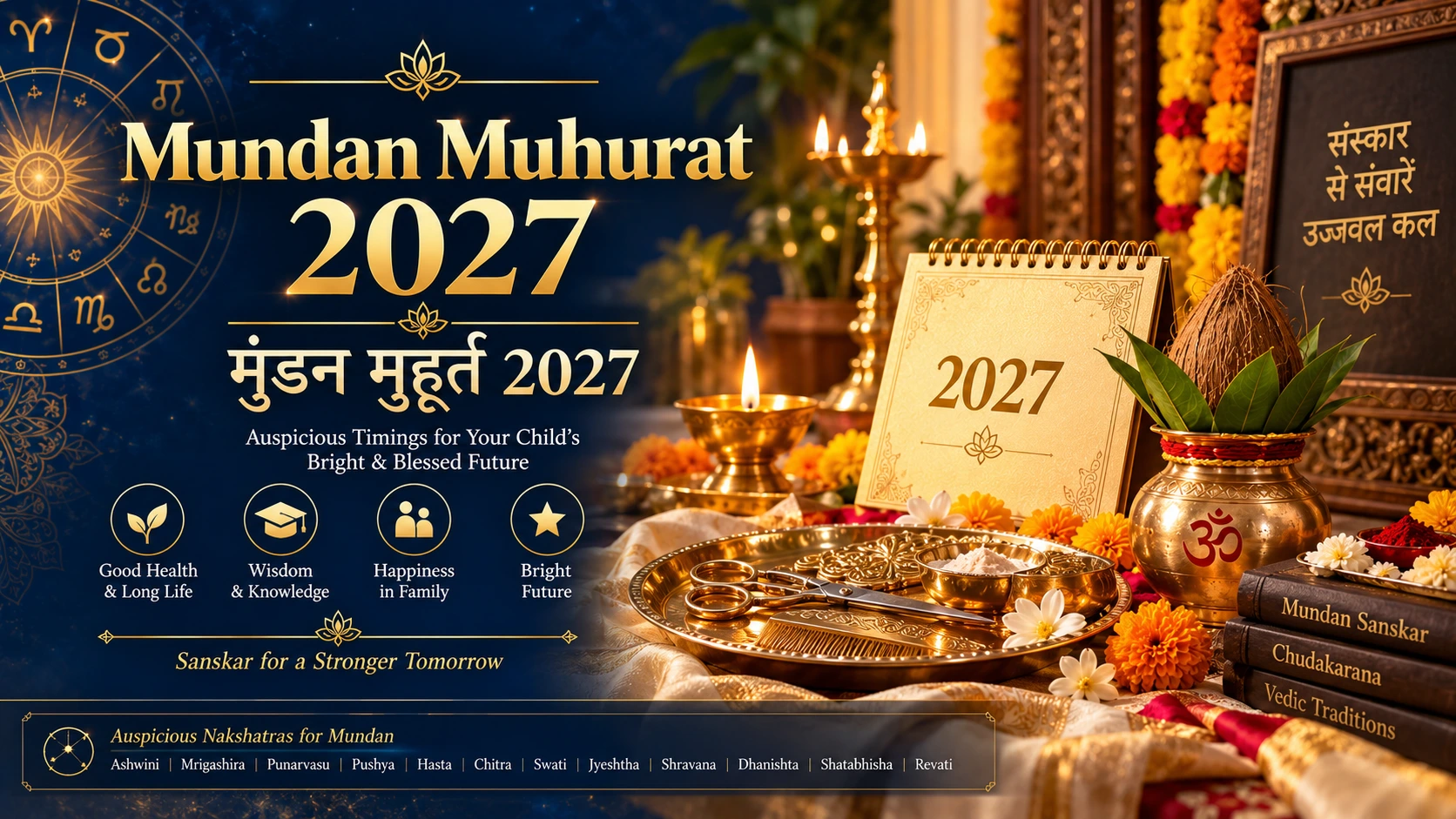
Tithi, Nakshatra, weekday and solar-month considerations are traditionally examined when selecting an Upanayana Muhurat. Favourable Nakshatras can include Rohini, Uttara Phalguni, Uttara Ashadha, Uttara Bhadrapada, Swati, Punarvasu, Shravana, Dhanishtha, Shatabhisha, Mrigashira, Revati, Chitra, Anuradha, Hasta, Ashwini and Pushya, subject to the complete Panchang.
These reference dates have been researched by comparing 2027 Upanayana patterns with traditional Panchang-based selection principles. We show the date and Nakshatra rather than one universal clock time because the exact Muhurat is location-sensitive.
A good shortlist becomes a practical sacred-thread ceremony Muhurat only after the date is checked against the family's tradition, applicable age rule and ceremony location.
Explore our dedicated 2027 Muhurat guides for other important Hindu ceremonies, with the same detailed and location-conscious approach.
Understanding the annual calendar is the first step. The final decision should reflect the family's Vedic tradition, applicable age convention, ceremony location and the Panchang factors for the selected day.
Upanayana Sanskar, commonly known as Janeu Sanskar or the sacred-thread ceremony, is an important traditional rite in many Hindu communities. It is associated with learning, discipline, responsibility and entry into a new stage of traditional education. Because customs differ across families and Vedic lineages, choosing an Upanayana Muhurat requires a little more care than simply selecting a convenient weekend.
Age is one of the first points families should clarify. Traditional texts and community practices can prescribe different ages according to lineage and social tradition. Some traditions count the prescribed age from birth, while others have their own established convention. The family should therefore confirm the age rule that applies to the child before shortlisting a date.
The annual Panchang is then used to identify periods that can be considered for the ceremony. Tithi, Nakshatra, weekday and solar month are important parts of the traditional selection. Favourable Nakshatras commonly considered for Upanayana include Rohini, Uttara Phalguni, Uttara Ashadha, Uttara Bhadrapada, Swati, Punarvasu, Shravana, Dhanishtha, Shatabhisha, Mrigashira, Revati, Chitra, Anuradha, Hasta, Ashwini and Pushya.
Solar-month rules are also important. Traditional Upanayana selection generally favours suitable periods during Uttarayana and avoids certain restricted periods. Kharmas is one such period that is commonly excluded in annual selection. This is why an annual calendar can have long gaps even when individual Nakshatras appear favourable.
The 2027 reference calendar on this page was prepared by comparing the recurring date patterns produced by traditional day-level selection rules. We have intentionally not presented one universal clock time for every city. Local sunrise, Tithi transitions, Nakshatra changes and other Panchang factors can alter the exact usable Muhurat.
There is also an important difference between an annual reference date and a personalised Muhurat. A day can meet general selection rules and still require further checking for the actual ceremony location and the family's tradition. For an important Sanskar such as Upanayana, the final time should therefore be confirmed before arrangements are made.
Families should also allow enough practical time for the ceremony itself. Priests, relatives, venue arrangements, travel, traditional preparations and the child's comfort all need to be coordinated. A clear shortlist of dates makes this process easier without treating the calendar as a substitute for personal guidance.
IndianAstroVedic guidance: use the 2027 calendar as a researched starting point, confirm the age and family tradition, shortlist suitable dates, verify the local Panchang and then finalise the exact Muhurat. For personalised guidance, the child's birth details and ceremony location can be considered together with the family's preferred tradition.
Clear answers to common questions families ask while planning a Janeu or sacred-thread ceremony.
Shortlist a suitable date, confirm the applicable family tradition and verify the local Muhurat before finalising your sacred-thread ceremony arrangements.