
⭐ Trusted by Thousands of Clients Across India
Home/Shubh Muhurat/Namkaran Muhurat 2027
Shubh Namkaran Muhurat 2027

Namkaran Muhurat 2027

Planning your baby's Namkaran Sanskar in 2027? Explore month-wise reference dates, traditional Panchang considerations and practical guidance for selecting a suitable naming ceremony Muhurat. The final ceremony timing should always be checked for the actual location.
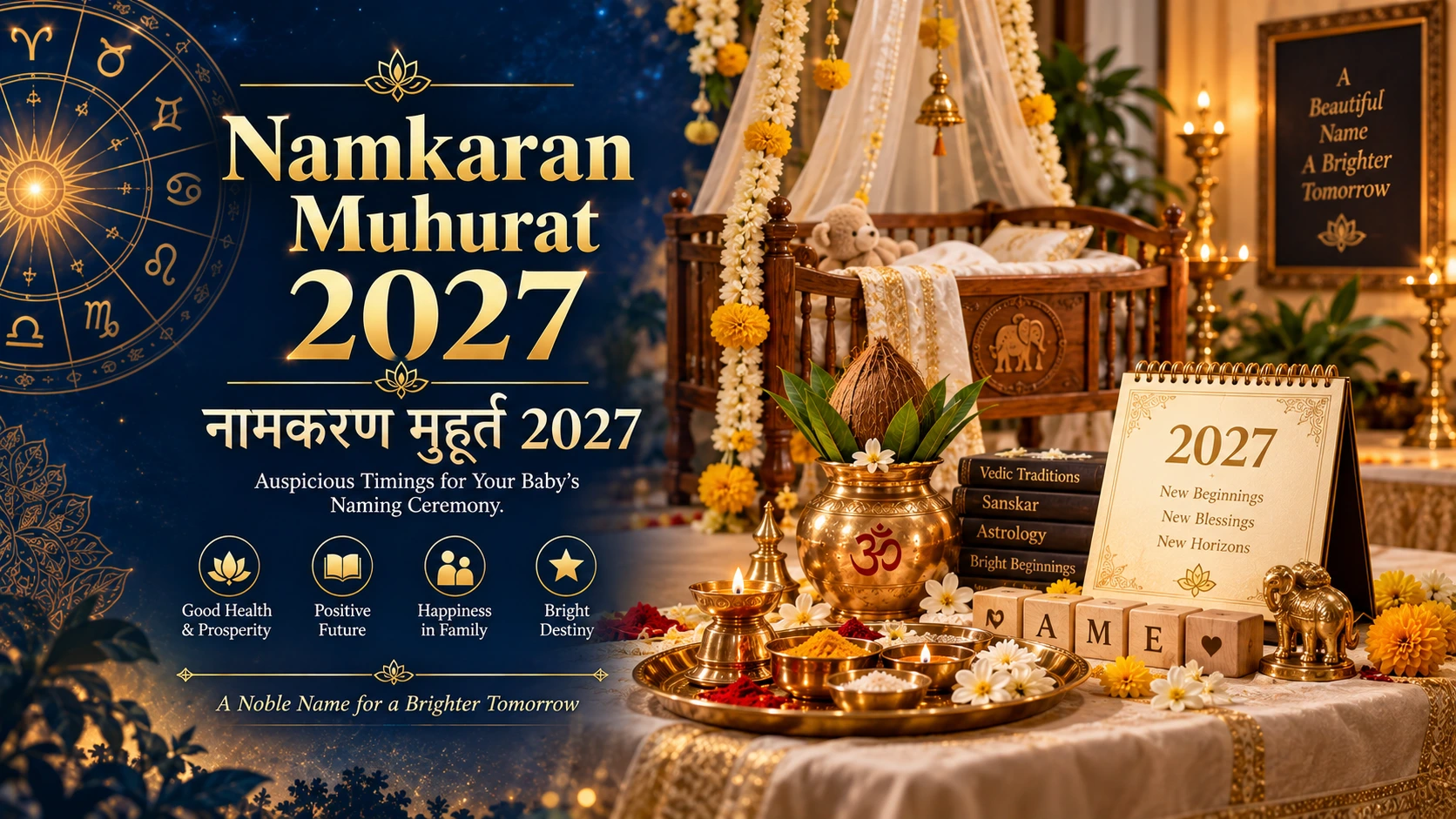
Namkaran Muhurat 2027 - Shubh Naming Ceremony Dates
Shubh Namkaran Dates & Muhurta Guidance
2027Namkaran Muhurat Calendar
101+Reference Naming Dates
Location BasedExact timing varies by city
Namkaran Muhurat Guide

How to Read Namkaran Muhurat 2027

Choosing a naming ceremony date traditionally involves more than finding a convenient day. The child's birth date, the customary timing of Namkaran, Tithi, Nakshatra, weekday, local Panchang and the actual ceremony window can all be considered before the date is finalised.

What Is Namkaran Muhurat?

Namkaran Muhurat is a traditionally selected period for performing a baby's naming ceremony, also known as Namkaran or Naamkaran Sanskar. The ceremony is commonly planned after the early post-birth period according to family and regional tradition, while the exact usable time is checked from the Panchang for the place where the ceremony will take place.

Why Panchang Matters

Tithi, Nakshatra, weekday and other Panchang factors are traditionally considered when selecting a Namkaran Muhurat. Many traditions prefer Nakshatras such as Rohini, Mrigashirsha, Pushya, Hasta, Chitra, Swati, Anuradha, Uttara Ashadha, Uttara Phalguni, Uttara Bhadrapada, Shravana, Revati and Ashwini, subject to the complete Panchang.

Important: The dates below are a planning reference, not a statement that the complete day is suitable for every family. Before fixing the ceremony, verify the exact Muhurat for the city, consider the child's birth details and follow the family or regional Namkaran tradition where applicable.
2027 Naming Ceremony Calendar

Month-Wise Namkaran Muhurat 2027

These reference dates have been researched by comparing 2027 Namkaran patterns with traditional Panchang-based selection principles. We show the date and Nakshatra rather than one universal clock time because the exact Muhurat is location-sensitive.

How to use this calendar: First check when your family's Namkaran tradition permits the ceremony, then shortlist dates from the calendar and verify the local Tithi, Nakshatra, sunrise and exact ceremony window. A public annual calendar is a useful starting point, while a local calculation gives the final timing.

January 2027

9 reference dates
3 January 2027Sunday
Nakshatra: Anuradha
8 January 2027Friday
Nakshatra: Uttara Ashadha
10 January 2027Sunday
Nakshatra: Shravana
13 January 2027Wednesday
Nakshatra: Uttara Bhadrapada
18 January 2027Monday
Nakshatra: Rohini
20 January 2027Wednesday
Nakshatra: Mrigashirsha
22 January 2027Friday
Nakshatra: Pushya
27 January 2027Wednesday
Nakshatra: Hasta
31 January 2027Sunday
Nakshatra: Anuradha

February 2027

7 reference dates
4 February 2027Thursday
Nakshatra: Uttara Ashadha
7 February 2027Sunday
Nakshatra: Dhanishtha
10 February 2027Wednesday
Nakshatra: Uttara Bhadrapada
15 February 2027Monday
Nakshatra: Rohini
19 February 2027Friday
Nakshatra: Pushya
24 February 2027Wednesday
Nakshatra: Hasta
28 February 2027Sunday
Nakshatra: Anuradha

March 2027

7 reference dates
3 March 2027Wednesday
Nakshatra: Uttara Ashadha
10 March 2027Wednesday
Nakshatra: Uttara Bhadrapada
14 March 2027Sunday
Nakshatra: Rohini
19 March 2027Friday
Nakshatra: Pushya
22 March 2027Monday
Nakshatra: Hasta
26 March 2027Friday
Nakshatra: Anuradha
31 March 2027Wednesday
Nakshatra: Uttara Ashadha

April 2027

7 reference dates
5 April 2027Monday
Nakshatra: Uttara Bhadrapada
7 April 2027Wednesday
Nakshatra: Revati
11 April 2027Sunday
Nakshatra: Rohini
14 April 2027Wednesday
Nakshatra: Pushya
19 April 2027Monday
Nakshatra: Hasta
23 April 2027Friday
Nakshatra: Anuradha
28 April 2027Wednesday
Nakshatra: Uttara Ashadha

May 2027

10 reference dates
3 May 2027Monday
Nakshatra: Uttara Bhadrapada
5 May 2027Wednesday
Nakshatra: Ashwini
7 May 2027Friday
Nakshatra: Rohini
9 May 2027Sunday
Nakshatra: Mrigashirsha
12 May 2027Wednesday
Nakshatra: Pushya
16 May 2027Sunday
Nakshatra: Hasta
20 May 2027Thursday
Nakshatra: Anuradha
24 May 2027Monday
Nakshatra: Uttara Ashadha
26 May 2027Wednesday
Nakshatra: Shravana
30 May 2027Sunday
Nakshatra: Uttara Bhadrapada

June 2027

8 reference dates
2 June 2027Wednesday
Nakshatra: Ashwini
4 June 2027Friday
Nakshatra: Rohini
7 June 2027Monday
Nakshatra: Pushya
13 June 2027Sunday
Nakshatra: Hasta
16 June 2027Wednesday
Nakshatra: Anuradha
21 June 2027Monday
Nakshatra: Uttara Ashadha
23 June 2027Wednesday
Nakshatra: Shravana
27 June 2027Sunday
Nakshatra: Uttara Bhadrapada

July 2027

9 reference dates
1 July 2027Thursday
Nakshatra: Rohini
5 July 2027Monday
Nakshatra: Pushya
9 July 2027Friday
Nakshatra: Hasta
14 July 2027Wednesday
Nakshatra: Anuradha
18 July 2027Sunday
Nakshatra: Uttara Ashadha
21 July 2027Wednesday
Nakshatra: Dhanishtha
24 July 2027Saturday
Nakshatra: Uttara Bhadrapada
25 July 2027Sunday
Nakshatra: Revati
29 July 2027Thursday
Nakshatra: Rohini

August 2027

8 reference dates
1 August 2027Sunday
Nakshatra: Pushya
6 August 2027Friday
Nakshatra: Hasta
11 August 2027Wednesday
Nakshatra: Anuradha
15 August 2027Sunday
Nakshatra: Uttara Ashadha
20 August 2027Friday
Nakshatra: Uttara Bhadrapada
22 August 2027Sunday
Nakshatra: Revati
25 August 2027Wednesday
Nakshatra: Rohini
29 August 2027Sunday
Nakshatra: Pushya

September 2027

9 reference dates
2 September 2027Thursday
Nakshatra: Hasta
6 September 2027Monday
Nakshatra: Anuradha
10 September 2027Friday
Nakshatra: Uttara Ashadha
12 September 2027Sunday
Nakshatra: Shravana
16 September 2027Thursday
Nakshatra: Uttara Bhadrapada
19 September 2027Sunday
Nakshatra: Ashwini
22 September 2027Wednesday
Nakshatra: Rohini
26 September 2027Sunday
Nakshatra: Pushya
30 September 2027Thursday
Nakshatra: Hasta

October 2027

9 reference dates
4 October 2027Monday
Nakshatra: Anuradha
8 October 2027Friday
Nakshatra: Uttara Ashadha
10 October 2027Sunday
Nakshatra: Shravana
13 October 2027Wednesday
Nakshatra: Uttara Bhadrapada
18 October 2027Monday
Nakshatra: Rohini
20 October 2027Wednesday
Nakshatra: Mrigashirsha
22 October 2027Friday
Nakshatra: Pushya
27 October 2027Wednesday
Nakshatra: Hasta
31 October 2027Sunday
Nakshatra: Anuradha

November 2027

7 reference dates
4 November 2027Thursday
Nakshatra: Uttara Ashadha
7 November 2027Sunday
Nakshatra: Dhanishtha
10 November 2027Wednesday
Nakshatra: Uttara Bhadrapada
15 November 2027Monday
Nakshatra: Rohini
19 November 2027Friday
Nakshatra: Pushya
24 November 2027Wednesday
Nakshatra: Hasta
28 November 2027Sunday
Nakshatra: Anuradha

December 2027

11 reference dates
1 December 2027Wednesday
Nakshatra: Uttara Ashadha
3 December 2027Friday
Nakshatra: Shravana
5 December 2027Sunday
Nakshatra: Dhanishtha
8 December 2027Wednesday
Nakshatra: Uttara Bhadrapada
9 December 2027Thursday
Nakshatra: Revati
10 December 2027Friday
Nakshatra: Ashwini
12 December 2027Sunday
Nakshatra: Rohini
17 December 2027Friday
Nakshatra: Pushya
21 December 2027Tuesday
Nakshatra: Hasta
25 December 2027Saturday
Nakshatra: Anuradha
29 December 2027Wednesday
Nakshatra: Uttara Ashadha
Why no universal time is printed: Namkaran Muhurat is location-sensitive. Our research considers traditional Panchang elements including Tithi, Nakshatra and weekday, together with the customary naming-ceremony rules. Rahu, Gulika and Yamaganda may also be avoided when selecting the final usable ceremony window.
Muhurta Checklist

What Should Be Checked Before Finalising the Namkaran Date?

A good shortlist becomes a practical naming ceremony Muhurat only after the date is checked against the child's birth details, family tradition and ceremony location.

  • Child's birth date and age: Namkaran is commonly associated with the early days after birth, while some families follow a later ceremony according to their regional or family custom.
  • Ceremony city: use the actual location because sunrise and local Panchang calculations affect the available Muhurat window.
  • Tithi: check the lunar date applicable at the ceremony time rather than relying only on the Gregorian calendar date.
  • Nakshatra: traditionally preferred Nakshatras are considered when identifying suitable naming-ceremony periods.
  • Weekday and Panchang factors: Monday, Wednesday, Thursday and Friday are commonly preferred in traditional Namkaran selection, subject to the complete Panchang and family practice.
  • Rahu, Gulika and Yamaganda: these intervals may be avoided for important ceremony activities even when the date itself is suitable.
  • Birth Nakshatra and naming syllable: many families consider the child's birth Nakshatra and its pada when selecting the opening sound or syllable of the name.
  • Final confirmation: confirm the exact ceremony window before sending invitations, booking arrangements or fixing travel plans.
About Shubh Namkaran Dates

Namkaran Muhurat 2027 – A Practical Guide for New Parents

Understanding the calendar is the first step. The final decision should be based on the child's birth details, family tradition, ceremony location and the Panchang factors applicable to the chosen date.

Planning a Baby Naming Ceremony in 2027

Namkaran Sanskar is one of the early traditional ceremonies performed after the birth of a child. For parents and families, it is both a joyful occasion and an important cultural milestone. Choosing a Namkaran Muhurat can feel confusing because the ceremony is closely connected with the child's birth date, family customs and Panchang calculations. A well-organised annual calendar makes the first stage easier by giving families a practical list of dates to investigate.

Traditionally, Namkaran is often performed around the eleventh or twelfth day after birth, although the exact practice varies between communities and families. Some traditions may observe the ceremony later because of health, travel, family circumstances or regional customs. For this reason, an annual Namkaran calendar should be treated as a reference rather than a replacement for the family's established practice.

The Panchang is an important part of the selection process. Tithi, Nakshatra, weekday and the local sunrise can affect whether a particular period is considered suitable. Many traditional guides also give importance to Nakshatras such as Rohini, Mrigashirsha, Pushya, Hasta, Chitra, Swati, Anuradha, Uttara Ashadha, Uttara Phalguni, Uttara Bhadrapada, Shravana, Revati and Ashwini. The final selection should always be checked as a complete combination rather than by looking at the Nakshatra alone.

The child's birth Nakshatra can have another role in the naming process. In many Hindu naming traditions, the pada of the birth Nakshatra is used to identify suitable opening sounds or syllables for the child's name. This is different from the Nakshatra of the ceremony date, so parents should not confuse the two when planning the name.

Location also matters. Panchang transitions are calculated using local astronomical timings, so the exact ceremony window can change from one city to another. A date that is useful for planning in one location may begin or end at a different local time elsewhere. This is why IndianAstroVedic presents the 2027 calendar as reference dates and recommends checking the exact local Muhurat before the ceremony is fixed.

Practical family planning is equally important. A newborn's sleep, feeding routine, health, travel distance, availability of grandparents and the comfort of close family members should be considered while arranging the ceremony. Traditional Muhurta planning works best when the chosen timing is also practical for the child and family.

IndianAstroVedic guidance: shortlist a date using the 2027 calendar, check the child's birth details and family tradition, verify the exact local Muhurat and then finalise the naming ceremony arrangements. For personalised guidance, the child's birth information can be considered together with the ceremony location and the family's preferred tradition.

Common Questions

Frequently Asked Questions About Namkaran Muhurat 2027

Clear answers to common questions parents ask while planning a baby's naming ceremony.

Namkaran Muhurat is a traditionally selected period for performing a baby’s naming ceremony, also known as Naamkaran or Namkaran Sanskar. The annual calendar provides a shortlist, while the exact ceremony timing is checked using the Panchang for the location.
Many Hindu traditions perform Namkaran around the eleventh or twelfth day after birth, while some families follow a different day based on regional or family custom. The post-birth purification period and the family’s established tradition should be considered before fixing the ceremony.
Different calculations may use different reference locations, Panchang settings and filtering criteria. Local sunrise affects the timing of Tithi and Nakshatra, so a date or time calculated for one city should not automatically be treated as universal.
They are reference dates for planning. The exact available Muhurat and clock time should be verified for the ceremony city because local sunrise and Panchang calculations can change the usable window.
Yes. In many traditional naming practices, the pada of the child’s birth Nakshatra is used to identify suitable opening sounds or syllables for the name. This is separate from the Nakshatra applicable on the ceremony date.
Yes. A personalised consultation can consider the child’s birth details along with the ceremony location and the available Panchang dates. This adds an individual layer of guidance to the traditional calendar-based selection.
Yes. It is sensible to shortlist dates first and verify the exact local Muhurat before finalising invitations, venue arrangements, travel or the ceremony schedule.

Planning Your 2027 Namkaran Ceremony?

Shortlist a suitable date, verify the local Muhurat and then plan the ceremony around your baby's comfort and family traditions. IndianAstroVedic offers personalised Muhurat and astrology consultation for families.