2027
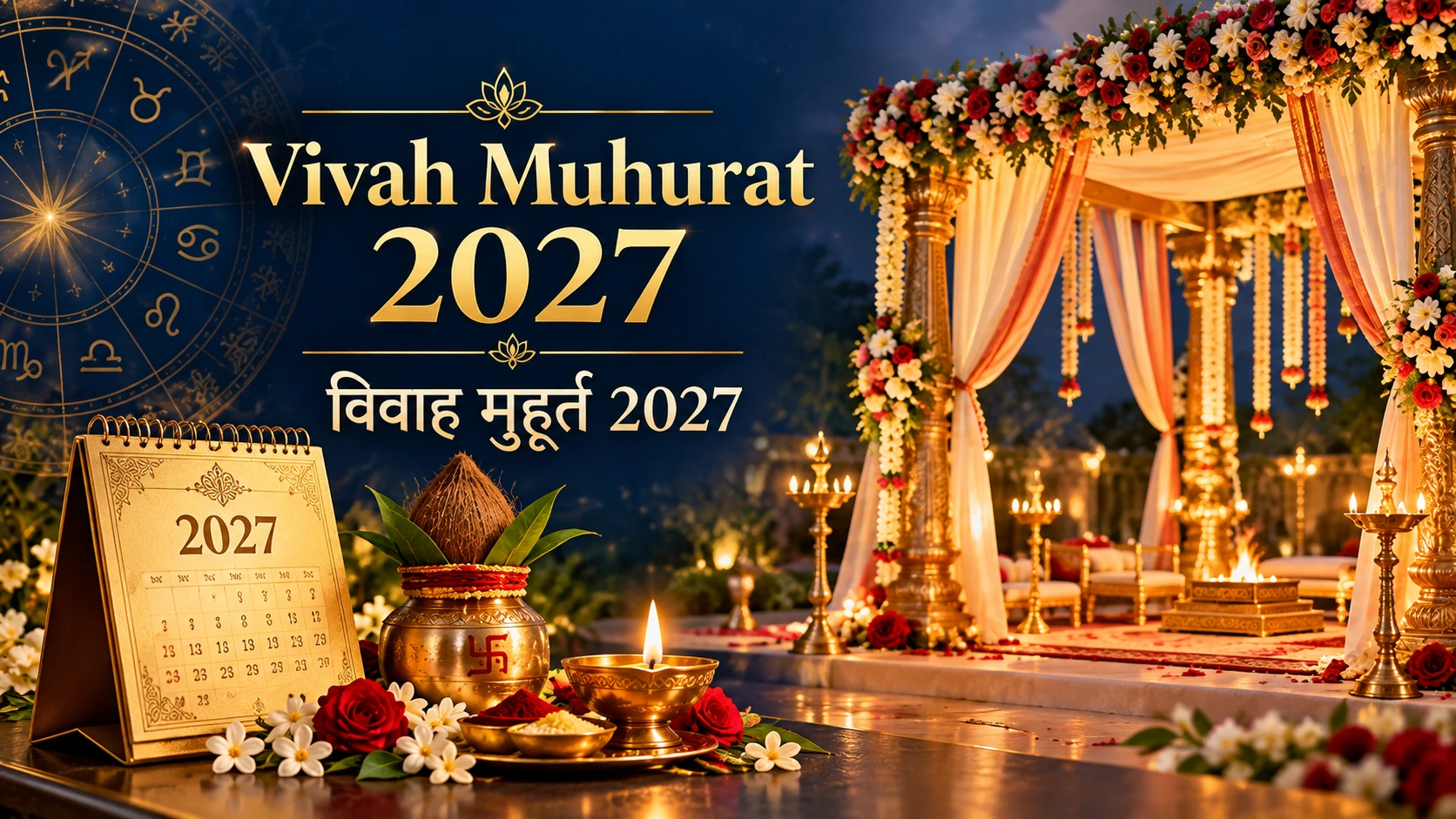
Vivah Muhurat 2027
Explore auspicious Hindu marriage dates, Vivah Muhurat considerations, Nakshatra, Tithi and location-based timing guidance for weddings in 2027.
View Vivah Muhurat 2027Explore auspicious dates and traditional Muhurat guidance for marriage, Griha Pravesh, Mundan, Namkaran, Upanayana and other important Hindu ceremonies.
Choose the ceremony you are planning and explore its dedicated 2027 Muhurat guide. Each ceremony has its own traditional rules, suitable Panchang combinations and timing considerations.
2027
Explore auspicious Hindu marriage dates, Vivah Muhurat considerations, Nakshatra, Tithi and location-based timing guidance for weddings in 2027.
View Vivah Muhurat 2027
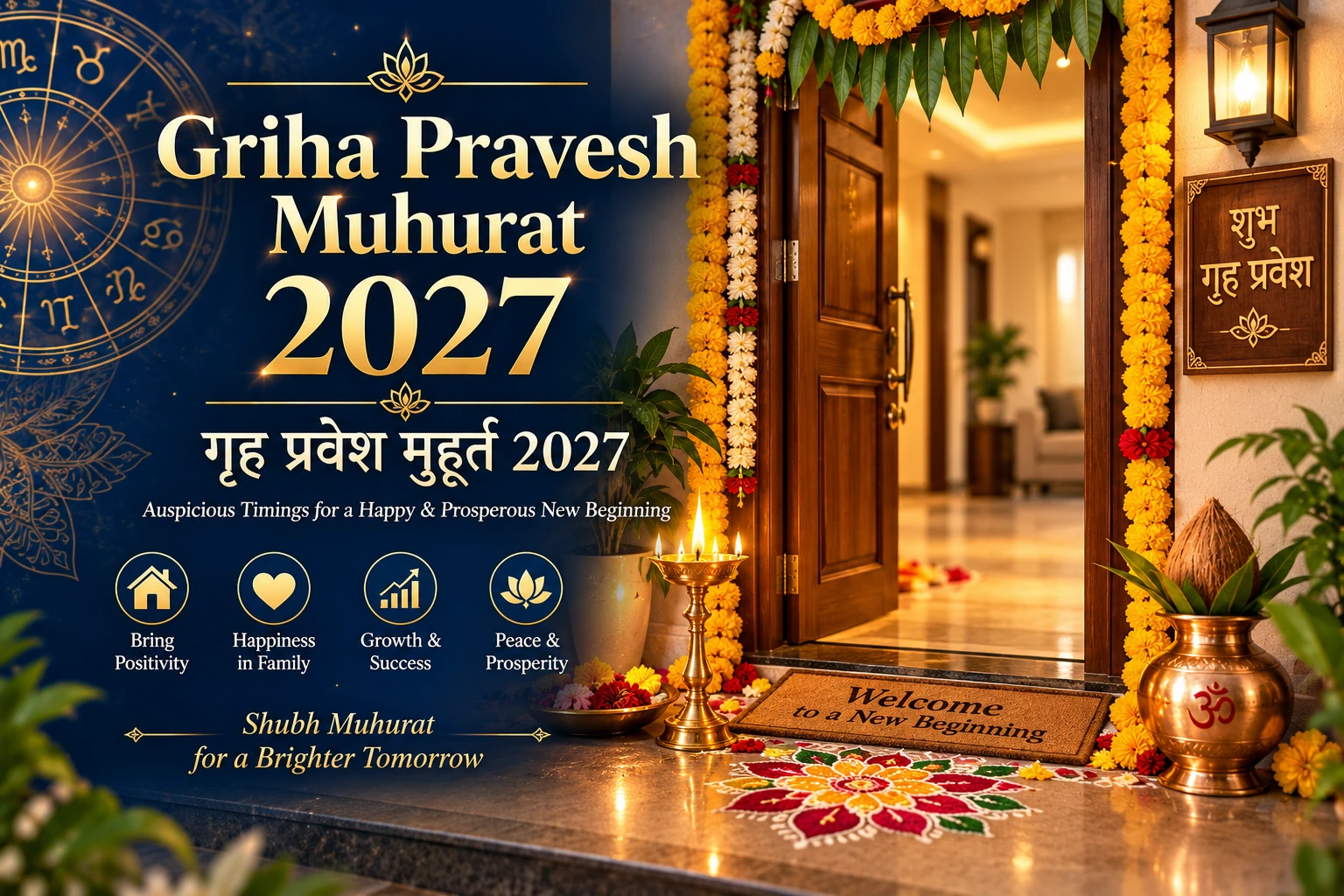
2027
Find auspicious Griha Pravesh dates and understand Panchang Shuddhi, Nakshatra, Tithi and local timing considerations for entering a new home.
View Griha Pravesh 2027
2027
Learn about auspicious dates for Mundan or Chudakarana Sanskar, including traditional age, Tithi, Nakshatra and weekday considerations.
View Mundan Muhurat 2027
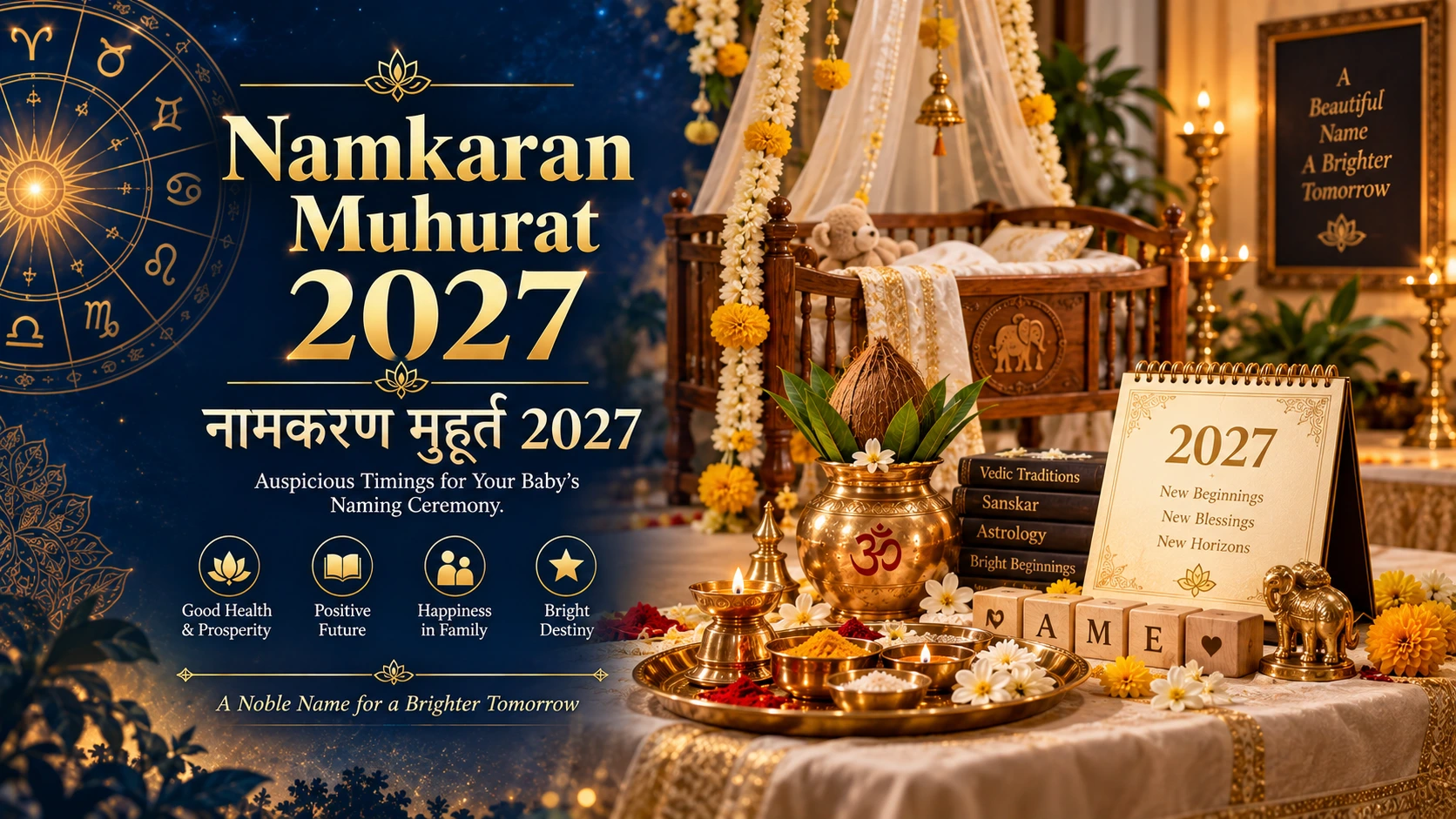
2027
Explore Namkaran Muhurat 2027 with guidance on traditional naming-ceremony dates, Nakshatra, Tithi, weekday and birth-chart related considerations.
View Namkaran Muhurat 2027
2027
Understand traditional Upanayana or Janeu Sanskar Muhurat considerations, including age, Nakshatra, Tithi, weekday and applicable family traditions.
View Upanayana Muhurat 2027Shubh Muhurat is an auspicious period traditionally selected for beginning an important activity, ceremony or new phase. In the Hindu Panchang system, the quality of a time period is assessed through several calendar and astronomical factors.
The idea behind Muhurat is to choose a time considered supportive for the purpose being started. A marriage, housewarming ceremony, child's Mundan, Namkaran and Upanayana are different events, so the traditional rules used for their Muhurat can also be different.
A good Muhurat page therefore needs more than a list of dates. It should explain the applicable Panchang factors, the ceremony-specific rules, the local timing and the circumstances in which a personalized Muhurat may be useful.
IndianAstroVedic's 2027 Muhurat guide follows this approach: first understand the general calendar, then verify the ceremony-specific date and exact time for the location where the event will take place.
The 2027 calendar contains different auspicious periods for different ceremonies. The dedicated pages will provide the ceremony-specific dates and timing details.
Panchang is traditionally described through five principal elements. Their combination helps identify suitable periods for different activities and ceremonies.
Tithi is the lunar day. The Hindu calendar divides the lunar month into Shukla Paksha and Krishna Paksha, and different Tithis may be preferred or avoided for specific ceremonies.
Vara means weekday. Sunday through Saturday are examined as part of the Panchang, with suitability depending on the activity being planned.
Nakshatra is the lunar mansion occupied by the Moon. The 27 Nakshatras have traditional characteristics and play an important role in many Muhurat calculations.
Yoga is calculated from the longitudinal positions of the Sun and Moon. Its nature can be considered when assessing an auspicious period.
Karana represents half of a Tithi. Certain Karanas are traditionally preferred for particular activities, while others may be avoided.
Traditional Muhurat selection is a filtering process. The ceremony is identified first, then unsuitable dates and periods are removed before an appropriate time window is finalized for the event location.
Determine whether the event is Vivah, Griha Pravesh, Mundan, Namkaran, Upanayana or another Sanskar because each has different traditional rules.
Review Tithi, weekday, Nakshatra, Yoga and Karana, along with the lunar or solar period relevant to the ceremony.
Where applicable, check Rahu Kaal, Yamaganda, Bhadra, Panchak, eclipses, Sankranti, Tara Asta and other traditionally restricted periods.
Check the exact start and end of the selected Muhurat for the actual ceremony city and apply any additional personalized requirements.
A general calendar normally identifies dates after applying relevant Panchang filters. This is useful for advance planning and shortlisting possible dates.
Published calendars should still be checked for the city where the ceremony will happen because exact timings can vary by location.
A personalized selection can go beyond a general calendar by considering relevant birth details and ceremony-specific factors, where the tradition calls for them.
This is particularly useful when a family has several possible dates and wants to shortlist a suitable time more specifically.
A date should not be selected only because it appears on a general calendar. Traditional Muhurat selection also checks periods and conditions that may make an otherwise convenient date unsuitable for a particular ceremony.
One of the most common mistakes is selecting a date from a generic list without checking the exact Muhurat window. A published date may contain one or more time windows, and those windows can change with the selected city.
Also check whether the date belongs to the correct ceremony category. A day suitable for one type of activity is not automatically a suitable Muhurat for marriage, Griha Pravesh, Mundan, Namkaran or Upanayana.
For an important ceremony, confirm the date, local timing and relevant traditional requirements before making final arrangements.
Each Muhurat category has its own purpose, traditional rules and calendar. Explore the individual 2027 pages for detailed dates and ceremony-specific guidance.
Vivah Muhurat is the auspicious timing traditionally selected for a Hindu marriage ceremony. Marriage Muhurat is commonly assessed through Panchang Shuddhi, suitable Nakshatras, Tithi, weekday, Yoga and Karana, along with other marriage-specific considerations.
A detailed Vivah Muhurat calendar can help couples shortlist wedding dates, but the exact marriage Muhurat should be checked for the wedding location. Some traditional methods also apply Lagna Shuddhi and personalized factors when the birth details of the bride and groom are available.
Explore Vivah Muhurat 2027
Griha Pravesh Muhurat is traditionally selected for entering a new or renovated home. The calculation can include Panchang Shuddhi using Tithi, Nakshatra, weekday and lunar-month considerations, followed by selection of a suitable time window for the city.
Published 2027 calendars demonstrate why location matters: different cities can produce different exact start and end times. The final housewarming Muhurat should therefore be verified for the actual property location.
Explore Griha Pravesh 2027
Mundan Muhurat, also called Chudakarana or Choula Muhurat, is the traditional timing selected for a child's first hair-cut ceremony. The suitable period may be assessed using Tithi, Nakshatra, weekday, lunar month and other ceremony-specific rules.
Traditional family practice can also affect the selection, including the child's age and the method used to determine the appropriate age for the Sanskar. The dedicated 2027 page should therefore explain both the dates and the applicable rules.
Explore Mundan Muhurat 2027
Namkaran Muhurat is the traditional auspicious timing for a newborn's naming ceremony. Depending on the tradition, the selection can consider the child's birth details, Nakshatra, Rashi, Tithi, weekday, Lagna and suitable naming-ceremony periods.
Namkaran is also closely associated with selecting an appropriate starting sound or syllable for the child's name in many astrological traditions. The Muhurat and naming method should be kept as two related but distinct decisions.
Explore Namkaran Muhurat 2027
Upanayana Muhurat, also known as Janeu or Yagyopavita Sanskar Muhurat, is the traditional auspicious timing for the sacred-thread ceremony. Traditional sources may consider the child's age, suitable Nakshatra, Tithi, weekday, daytime, solar month and Lagna.
Upanayana rules can vary by family tradition, Vedic school and regional practice. For that reason, the 2027 guide should clearly explain the calculation method and avoid presenting one rule as universal.
Explore Upanayana Muhurat 2027The date and exact time shown by a Panchang can depend on the selected city. Sunrise, sunset, Lagna and other local astronomical calculations change from one location to another. For this reason, IndianAstroVedic will identify the calculation location on detailed Muhurat pages and avoid presenting one city's exact timing as universally applicable.
Answers to common questions about Muhurat dates, timings and traditional Panchang calculations.
Choosing an auspicious date is an important part of traditional Hindu event planning. Families often consult the Panchang before fixing a wedding, entering a new home, performing a child's first haircut, conducting a naming ceremony or arranging an Upanayana Sanskar. Shubh Muhurat 2027 brings these commonly searched Muhurat categories together so that planning can begin from one central reference page.
A Muhurat should be understood as a time window rather than only a date printed on a calendar. The Hindu Panchang combines Tithi, Vara, Nakshatra, Yoga and Karana, while ceremony-specific traditions can introduce additional conditions. For example, marriage Muhurat has its own rules, while Namkaran may consider the child's birth Nakshatra and Rashi. Griha Pravesh has its own seasonal and Panchang considerations, and Upanayana follows additional traditional rules concerning age, Nakshatra and ceremony timing.
Another important point is location. The same civil date can have different sunrise, sunset, Lagna and Panchang time boundaries in different cities. Published 2027 calendars demonstrate this clearly: detailed Panchang services provide city-specific Muhurat windows rather than assuming that one exact time applies across the country. Therefore, the final Muhurat for an important ceremony should be checked for the city where the event will actually take place.
IndianAstroVedic's 2027 Muhurat section is being developed around this principle. The master page explains the traditional framework, while individual pages will provide detailed ceremony-specific calendars. This structure makes it easier to find Vivah Muhurat 2027, Griha Pravesh Muhurat 2027, Mundan Muhurat 2027, Namkaran Muhurat 2027 and Upanayana Muhurat 2027 without mixing the rules of one ceremony with another.
If you are planning an important event, start by identifying the ceremony, shortlist suitable dates, check the location-specific timing and then consider whether a personalized consultation is appropriate. A general 2027 calendar is useful for advance planning, while an astrologer can help when the family wants a more customized selection based on the applicable tradition and personal birth details.
Discuss your ceremony, preferred dates and location with an IndianAstroVedic astrologer and understand which additional factors may need to be considered.
Talk to an Astrologer